Education is in crisis. Large Language Models (LLMs) have entered our lives in a remarkably short period, offering limitless possibilities—at least on paper. We are still uncovering what they are truly capable of. This shift is happening while schools are still struggling to integrate computers, smartphones, and social media.
It is not the fault of the educators; technology is advancing at an unprecedented pace, with breakthroughs released just months after their discovery. Education, by nature, requires time to prepare programs, train staff, and study the long-term impact of these tools on students.
The Unanswered Questions
As we navigate this transition, several critical questions remain:
- Should we forbid or encourage these technologies in the classroom?
- How should the role of the teacher evolve?
- Will we still need schools and traditional diplomas in the future?
- Can AI help teachers cope with the structural lack of resources currently plaguing the system?
- In a world where information is accessible in seconds, what is actually worth teaching?
I don’t pretend to have all the answers, but I would like to bring a few thoughts to the table.
The Purpose of Education
I believe the core purpose of education remains unchanged: to shape students into useful members of society—good citizens who bring stability to the system and possess the skills to produce value in both the public and private sectors. Assuming humans will continue to play a role in society, the fundamental "why" of education stays the same.
What is Worth Learning?
What is worth remembering in the information age? My answer is concepts, not details (unless you are a specialist). It is more important to maintain a "big picture" view—to know what questions to ask and how to distinguish between what is vital and what is noise.
The future belongs to the polymaths. While the past favored the specialist, the future favors those who can connect different fields. Having a good memory will always be useful, but it is no longer the primary indicator of intelligence. As someone with a terrible memory myself, I find this shift quite comforting!
Rethinking Assessment
If we change what we teach, we must change how we assess. We should stop testing students on rote memorization and focus instead on broad understanding and end-to-end projects.
Regarding the debate over AI-generated homework: this is not a new issue. In the past, siblings or parents often did a student's homework. Written essays are no longer a reliable way to evaluate a student unless they are paired with an oral interview to ensure the student truly understands the work.
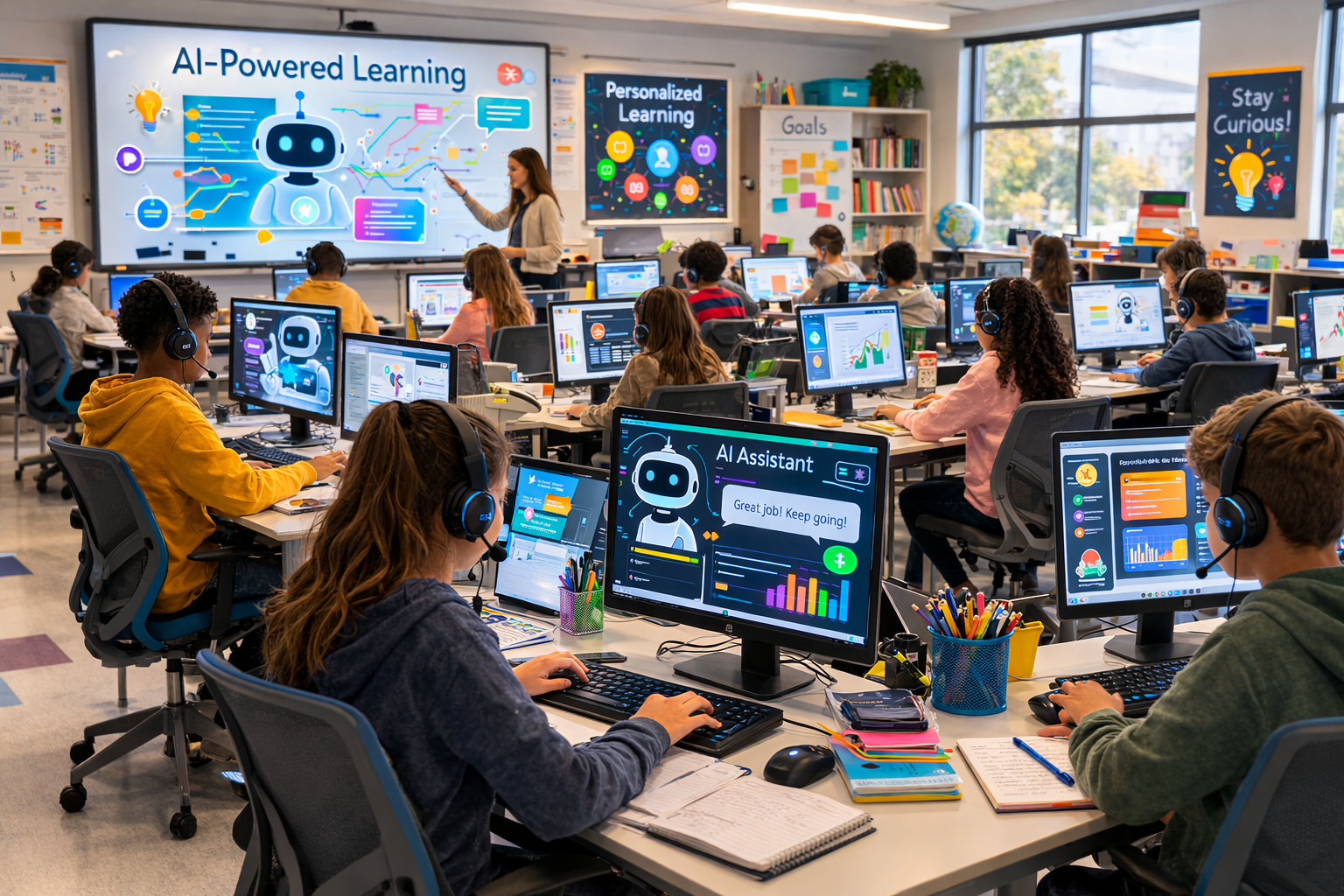
Furthermore, AI offers a formidable opportunity to move away from "one-size-fits-all" testing. Every student has different interests and learning paces. AI can create personalized learning paths and adapted exams that validate a similar degree of understanding through different lenses.
The Evolution of the Teacher
The role of the teacher will likely shift from "lecturer" to coach and supervisor. Students will still go to school—they need it for socialization—but they will no longer spend the day listening to a single teacher at the front of the room. Instead, they may have a dedicated AI tutor guiding them through content. Teachers will become the supervisors of this process, using AI feedback to monitor progress and behavior.
By spending less time on content delivery, teachers will have a golden opportunity to focus on soft skills: instilling self-motivation, passion, resilience, critical thinking, ethics, and values. Most importantly, they will have more time to focus on the emotional well-being of students. We all know how difficult adolescence can be; having a human mentor present for that journey is irreplaceable.
Final Thoughts
Technology should not be seen as a threat. We must not confuse the means with the end. By focusing on the positive potential of AI without being blind to its dangers, we can redefine education for a new era.